Fire Inspections
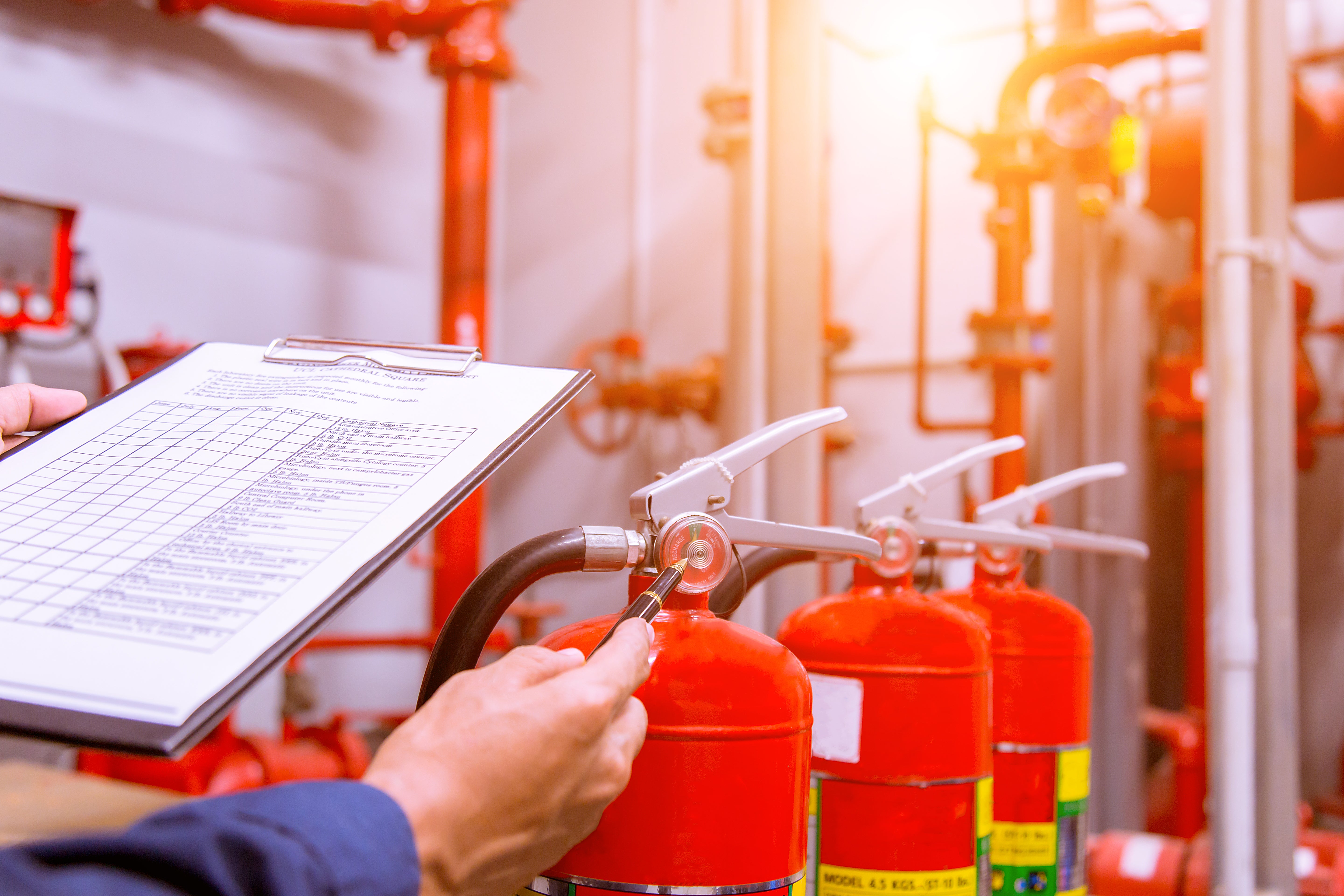
Periodic fire inspections are conducted in order to identify and mitigate fire hazards which are often a direct result from daily activities in all occupancies. These inspections also verify that all fire protection equipment and systems perform to their intended design. In addition, our inspections provide insight to areas that may require additional education or training.
Fire Inspections
In preparation for the upcoming fire inspection, please take a moment to review the top fire hazards found during inspections, how they could affect you or your co-workers, and how you can help correct them.
Common Fire Hazards found during inspections:
Corridors and exit paths are blocked by storage, debris, or other obstructions.
How you can help: Maintain corridors and exits free of storage/materials so that all occupants have a clear path to evacuate in an emergency.
Fire Doors/Corridor Doors. Wedges, chains, hooks, tape, etc. holding fire doors in the open position or preventing full closure and latching.
How you can help: Reduce the spread of smoke or fire throughout your building by ensuring all fire doors close and latch properly. This will slow the spread of the fire and give you and your co-workers either a chance or path to exit, to safety (EAA).
Compressed gas cylinders are not properly secured in an approved manner. Unsecured gas cylinders can fall, become missile-like projectiles, and release gases that could asphyxiate or poison.
How you can help: Ensure that cylinders are secured in their racks or with a minimum of two straps/chains.
Sprinkler heads are obstructed by storage or equipment that will block the flow of water. Sprinklers require 18” clearance below the head to effectively control a fire when activated. Blocking the spray of these heads could allow the fire to spread.
How you can help: remove storage that is closer than 18” below a sprinkler head.
Electrical, extension cords, space heaters used in an unsafe or unapproved manner:
- Do not plug into one another (daisy chained)
- Do not use to power appliances
- Replace damaged extension cords
- Do not use it for prolonged periods of time exceeding 30-days of continuous use
- Do not extend electrical cords under doors or walls into another room
- Personal space heaters are not permitted on campus, if a room or office temperature is not within the average temperature submit a service request for temperature adjustment
How you can help: only use extension cords for portable appliances. Contact Facilities if your area needs more outlets.
Housekeeping. Combustible materials not properly managed, allowed to accumulate, stored in front of electric panels, or in stairways or exit corridors. Excess combustible materials are fuel for fire, can endanger fellow occupants, and inhibit fire department response, as well as occupants from safely exiting the building.
How you can help: do not let discarded combustible materials accumulate. Call Facilities Services at (951) 827-4214 to schedule a pick-up.
We are proud to offer support of special events and non-core activities of the University at the following recharge rates:
Fire Safety Supervisor: $ 80.09/hour
Fire Safety Inspector: $ 47.56/hour
For more information regarding these services, please contact the Campus Fire Marshal.